
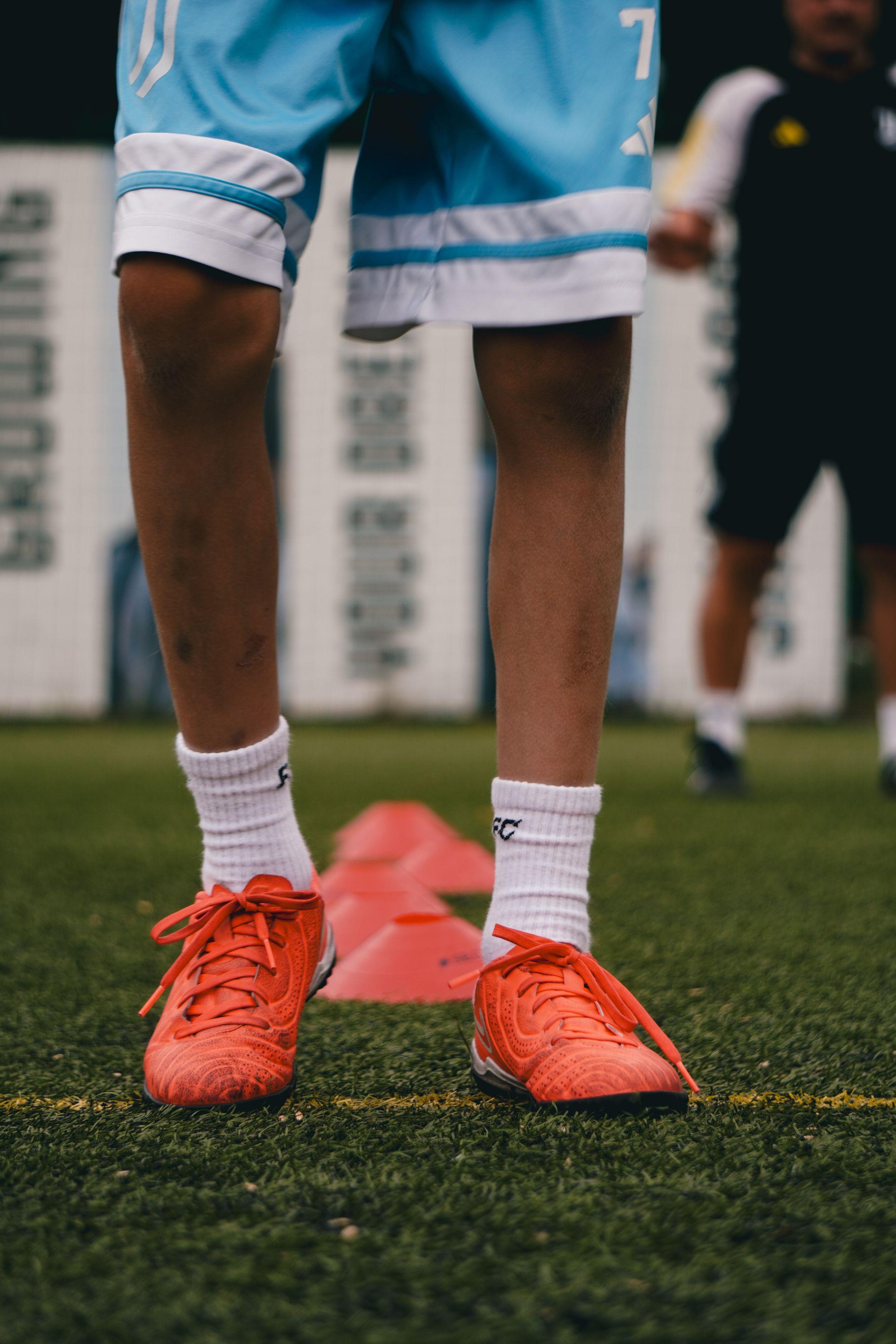
The start of a new school year often means a rapid return to practices, games, tournaments, and after-school training. Young athletes may go from a relatively relaxed summer schedule to running, jumping, cutting, and competing several days a week.
That sudden increase in activity can place significant stress on growing feet and ankles. Ankle sprains, fractures, tendon injuries, heel pain, and overuse conditions can affect athletes in nearly every sport, from football and soccer to volleyball, cross-country, dance, and cheerleading.
As an orthopedic foot and ankle surgeon, I want parents, coaches, and athletes to understand which symptoms may improve with basic care and which ones deserve a closer look. A seemingly minor injury can sometimes lead to instability, recurring sprains, or chronic ankle pain when it is ignored or rehabilitation is incomplete.
Young athletes often return to organized sports after a period of inconsistent training. Even when they have stayed active over the summer, they may not be prepared for the intensity, frequency, or sport-specific movements required during a new season.
Several factors can increase injury risk:
Growing athletes also experience changes in bone length, muscle flexibility, coordination, and balance. During a growth spurt, movements that once felt natural may temporarily become more difficult or less controlled.
This does not mean young athletes should avoid sports. Physical activity offers enormous physical, emotional, and social benefits. The goal is to recognize injuries early and help athletes return safely rather than asking them to play through symptoms that may worsen.
Ankle sprains are among the most common injuries I see in athletes. They occur when the ligaments supporting the ankle are stretched or torn, often after the foot rolls inward during a landing, sudden change of direction, or collision.
An athlete with a sprain may experience:
Sprains can range from mild ligament stretching to complete tears. Because fractures and sprains can initially cause similar pain and swelling, it is not always possible to determine the extent of the injury by appearance alone. In children, ankle fractures may also involve a growth plate and require appropriate evaluation.
An athlete who cannot stand or walk, has severe pain, experiences substantial swelling, or has visible deformity should be evaluated promptly.
A common mistake is assuming that every ankle sprain will heal adequately with a few days of rest.
Pain and swelling may decrease before the ankle has regained its full strength, balance, motion, and stability. If an athlete returns to competition too soon, the weakened ankle may roll again. Each additional sprain can cause more ligament damage and make the joint feel increasingly unreliable.
Repeated ankle sprains can lead to long-term instability, arthritis, and chronic ankle pain. Incomplete rehabilitation is one of the most common reasons patients continue to have problems after an ankle sprain.
An ankle that repeatedly gives way is not something a young athlete should simply learn to tolerate. Persistent instability may indicate that the ligaments have not healed properly, the surrounding muscles remain weak, or another injury was missed.
Young athletes can sustain fractures after a fall, collision, forceful landing, or direct impact. A fracture may involve the ankle, heel, toes, or bones through the middle or front of the foot.
Warning signs may include:
Not every fracture causes an obvious deformity. Some athletes can even continue walking on a fracture, especially if it is nondisplaced.
I recommend evaluation when pain is severe, the athlete cannot bear weight, or symptoms fail to improve as expected. Imaging may be needed to distinguish a fracture from a sprain and identify the most appropriate treatment.
Not every sports injury happens during one dramatic moment. Overuse injuries develop gradually when repetitive stress exceeds the body’s ability to recover.
A stress fracture is a small crack or severe bone stress reaction that can develop after repeated running and jumping. These injuries may occur when an athlete increases training too quickly, changes playing surfaces, begins a new sport, or continues practicing without adequate recovery.
Stress-fracture pain often:
Continuing to train through a stress reaction can allow it to progress into a more significant fracture. Treatment commonly requires a temporary reduction or complete break from impact activity so the bone can heal.
Young athletes should not assume that gradual pain is simply soreness. Pain that returns every time an athlete runs, jumps, or practices deserves attention.
Heel pain is another frequent complaint, particularly among children going through growth spurts.
One common source is Sever’s disease, an irritation of the growth area at the back of the heel. It frequently affects active children who participate in running and jumping sports.
Symptoms may include:
Reducing high-impact activity, addressing flexibility, and using supportive footwear may help relieve symptoms. Young athletes experiencing heel pain may need to temporarily limit running and jumping while the irritation settles.
Although Sever’s disease generally does not cause permanent damage, the pain can significantly affect an athlete’s performance and movement. Evaluation can help rule out other causes and create an appropriate return-to-sport plan.
Tendons connect muscles to bones and help the foot and ankle move efficiently. In young athletes, repetitive activity or a sudden force can irritate or injure tendons around the ankle and foot.
The Achilles tendon, peroneal tendons, and tendons supporting the arch may become painful or inflamed.
Possible symptoms include:
Tendon pain should not be treated as ordinary muscle soreness when it continues to return. Changes in mechanics caused by a painful tendon can also place additional stress on other areas of the foot, ankle, knee, or leg.
Midfoot injuries are sometimes mistaken for ordinary sprains, but certain injuries in this area can be more serious.
A Lisfranc injury affects the bones, joints, or ligaments through the middle of the foot. It may occur when the foot is twisted while planted, when another player lands on the heel, or during a collision.
Symptoms can include:
Persistent midfoot pain should be evaluated, particularly when rest and elevation do not reduce the symptoms. The American Academy of Orthopaedic Surgeons recommends orthopedic evaluation when presumed sprain symptoms in this area do not improve with standard care.
Early diagnosis matters because an unstable midfoot injury may require more extensive treatment.
Chronic ankle pain is pain that persists or repeatedly returns after the original injury should have improved. It is not a diagnosis by itself. Rather, it is a symptom that can have several possible causes.
These may include:
Some athletes describe pain, while others primarily notice weakness, swelling, stiffness, clicking, or an ankle that repeatedly gives way.
Research and orthopedic guidance indicate that a meaningful percentage of people who sustain acute lateral ankle sprains later develop chronic instability, recurring sprains, or persistent pain.
A young athlete who has “sprained the same ankle five times” does not simply have bad luck. There may be a correctable problem with ligament stability, strength, balance, joint alignment, or rehabilitation.
Some minor injuries improve with activity modification, ice, compression, elevation, and appropriate monitoring. However, parents should seek medical evaluation when an athlete:
Young athletes should also be evaluated when pain changes the way they run, walk, or land. Compensating for one painful area can create additional problems elsewhere.
Returning to sports should not be based solely on the date of the next game. Recovery rates vary based on the injury, its severity, the athlete’s age, and the demands of the sport.
Before returning, an athlete generally needs to recover:
A young athlete who can walk without pain may not yet be ready to sprint, pivot, or land from a rebound. Sport-specific progression is important.
Rehabilitation exercises that restore motion, strength, and balance can support a safer return to activity. A structured conditioning program can also help athletes resume sports and recreational activities after an injury.
Bracing or taping may be appropriate for some athletes, especially those with a history of ankle sprains, but these supports should complement—not replace—proper rehabilitation.
No prevention strategy can eliminate every injury, but several habits can reduce unnecessary risk.
I encourage young athletes to:
Athletes who have already experienced an ankle sprain may benefit particularly from balance exercises, strengthening, or supportive taping and bracing when medically appropriate. The American Academy of Pediatrics notes that exercises restoring motion, strength, and balance are important when returning to sports, while braces or tape may help reduce recurring ankle sprains in some athletes.
Parents and coaches also play an important role. Young athletes may minimize symptoms because they are worried about losing playing time or disappointing their team. Creating an environment where athletes can report pain honestly helps prevent small problems from becoming season-ending injuries.
Many foot and ankle injuries improve with nonsurgical care, including activity modification, bracing, physical therapy, and a gradual return to play.
When symptoms persist, advanced imaging or additional evaluation may reveal ligament damage, tendon tears, cartilage injuries, fractures, or structural instability. Surgery is not necessary for every athlete, but it may be considered when a significant injury fails to respond to appropriate nonsurgical treatment.
My approach is focused on efficient and effective care using modern foot and ankle techniques and technology. Depending on the condition, this may include minimally invasive procedures, advanced reconstructive methods, or innovative solutions designed to restore stability and function.
The goal is not simply to get an athlete through the next game. It is to protect long-term mobility and help the patient return to activity with a foot or ankle that can meet the demands of the sport.
Back-to-school sports should be an exciting opportunity for young athletes to compete, develop skills, and spend time with their teammates. Foot and ankle pain should not automatically end the season, but it should not be ignored either.
An early evaluation can clarify whether an athlete has a mild injury that can be managed conservatively or a more significant condition requiring targeted treatment. It can also help prevent repeated injuries and long-term concerns such as instability or chronic ankle pain.
I treat foot and ankle conditions in patients ranging from young athletes to professional competitors and active adults. My goal is to identify the source of the problem and use efficient, effective, and innovative treatment strategies to help each patient regain function and quality of life.
To schedule an appointment with me through Rothman Orthopaedics, visit the online scheduling portal and select an available location and appointment time.
This article is intended for general educational purposes and should not be used as a substitute for an individualized medical evaluation, diagnosis, or treatment plan.
