
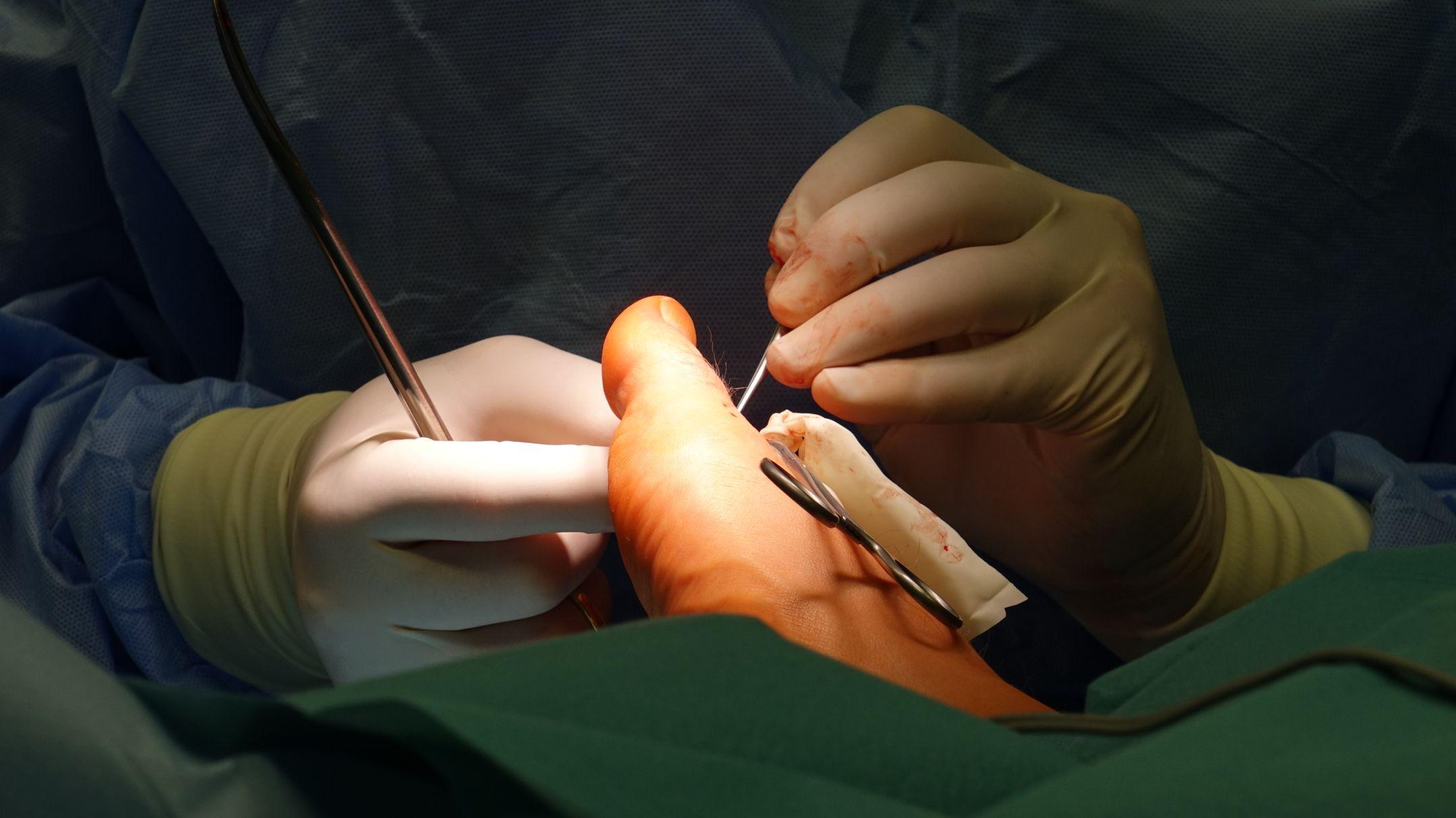
Bunions are one of the most common foot problems treated by specialists in orthopedic surgery. For some people, a bunion is mainly a cosmetic concern. For others, it causes daily pain, difficulty walking, and trouble finding comfortable shoes.
Many patients still think bunion surgery means a large incision, weeks of immobility, and a long recovery. That picture is outdated.
In 2026, advances in imaging, surgical planning, fixation technology, and minimally invasive techniques have changed how many surgeons approach bunion correction. Patients often return to activities sooner and experience less disruption during recovery than they would have years ago.
But surgery is not the right answer for everyone.
Here's what has changed in bunion treatment and how doctors determine whether someone is a good candidate for orthopedic surgery.
A bunion develops when the big toe gradually shifts toward the smaller toes. As this happens, the joint at the base of the big toe moves out of alignment and creates a bony prominence on the side of the foot.
Over time, this misalignment can worsen.
Common symptoms include:
Many people live with bunions for years before seeking treatment.
The biggest change is not one single procedure. It's the ability to tailor treatment more precisely to each patient.
Modern orthopedic surgery uses better diagnostic tools and more personalized treatment planning than ever before.
Advanced imaging allows surgeons to evaluate the entire foot structure rather than focusing only on the bunion itself.
Foot alignment, joint stability, bone position, and walking mechanics all influence surgical planning.
This leads to more accurate correction and helps address the underlying cause of the deformity.
Many bunion procedures now use smaller incisions than traditional approaches.
Minimally invasive orthopedic surgery often reduces soft tissue disruption around the foot.
Potential benefits include:
Not every patient qualifies for minimally invasive surgery, but it has expanded treatment options for many individuals.
Modern implants and fixation systems have also improved.
Today's surgical hardware provides stronger stabilization while allowing surgeons to correct alignment more precisely.
This can support earlier weight-bearing in selected patients and improve overall recovery experiences.
Three-dimensional imaging and digital planning tools continue to improve treatment accuracy.
Some surgeons now incorporate advanced technologies and customized approaches to evaluate complex foot deformities before entering the operating room.
The goal remains simple: restore alignment while preserving function.
The size of a bunion does not automatically determine whether surgery is necessary.
Pain and function matter more.
A person with a large bunion and no symptoms often does not need surgery. Meanwhile, someone with a smaller bunion that causes daily pain may benefit from treatment.
Candidates for orthopedic surgery often experience one or more of the following:
Pain is one of the most common reasons people consider surgery.
If discomfort continues despite shoe modifications, padding, orthotics, and activity adjustments, surgery becomes a reasonable option.
Pain that interferes with daily activities deserves attention.
Bunions can alter the way you walk.
As the deformity progresses, patients often shift weight away from the painful area. This compensation can create additional stress elsewhere in the foot.
If walking becomes difficult or uncomfortable, surgical correction may help restore function.
Most surgeons recommend trying non-surgical treatments first.
These may include:
When these measures no longer provide relief, orthopedic surgery becomes a stronger consideration.
Some bunions continue to worsen over time.
As alignment changes, the deformity may begin affecting neighboring toes and joints.
In these cases, delaying treatment sometimes leads to more complex correction later.
Many patients reach a point where bunions affect everyday activities.
Exercise becomes difficult. Standing for long periods hurts. Travel becomes uncomfortable. Shoe choices become increasingly limited.
When a bunion affects quality of life, surgical treatment may provide meaningful improvement.
Not every bunion requires an operation.
If your symptoms are mild and manageable, conservative treatment often remains appropriate.
You may not need surgery if:
The decision should focus on symptoms and function, not appearance alone.
Surgery is intended to improve comfort and movement, not simply change how the foot looks.
Recovery depends on the procedure performed, the severity of the deformity, and the patient's overall health.
There is no single recovery timeline.
Many patients begin walking in a protective boot much earlier than people expect. Others require longer protection depending on the correction performed.
Recovery generally involves:
Athletes and highly active individuals often follow specialized rehabilitation programs designed around their goals.
A successful recovery depends on following postoperative instructions carefully.
If you're thinking about bunion surgery, ask your surgeon:
These conversations help set realistic expectations and support informed decision-making.
One reason bunion treatment has improved is that surgeons now recognize there is no universal solution.
Every foot is different.
Every patient's activity level, goals, anatomy, and symptoms are different.
The best results come from matching the right procedure to the right patient.
That's why modern orthopedic surgery focuses on individualized evaluation rather than applying the same treatment plan to everyone.
Bunion surgery in 2026 looks very different from what many patients imagine. Advances in imaging, minimally invasive techniques, fixation technology, and surgical planning have expanded treatment options and improved patient experiences.
But surgery remains a personal decision.
The best candidates are people whose bunions cause persistent pain, limit activity, interfere with daily life, or continue to worsen despite conservative treatment.
An experienced foot and ankle specialist can help determine whether surgery is appropriate and which approach best fits your goals.
If bunion pain is affecting your daily life, schedule an appointment with Dr. Selene Parekh for a comprehensive evaluation. Through a personalized assessment and discussion of the latest treatment options in orthopedic surgery, you can better understand your condition and determine the most appropriate path forward for long-term foot health and function.
