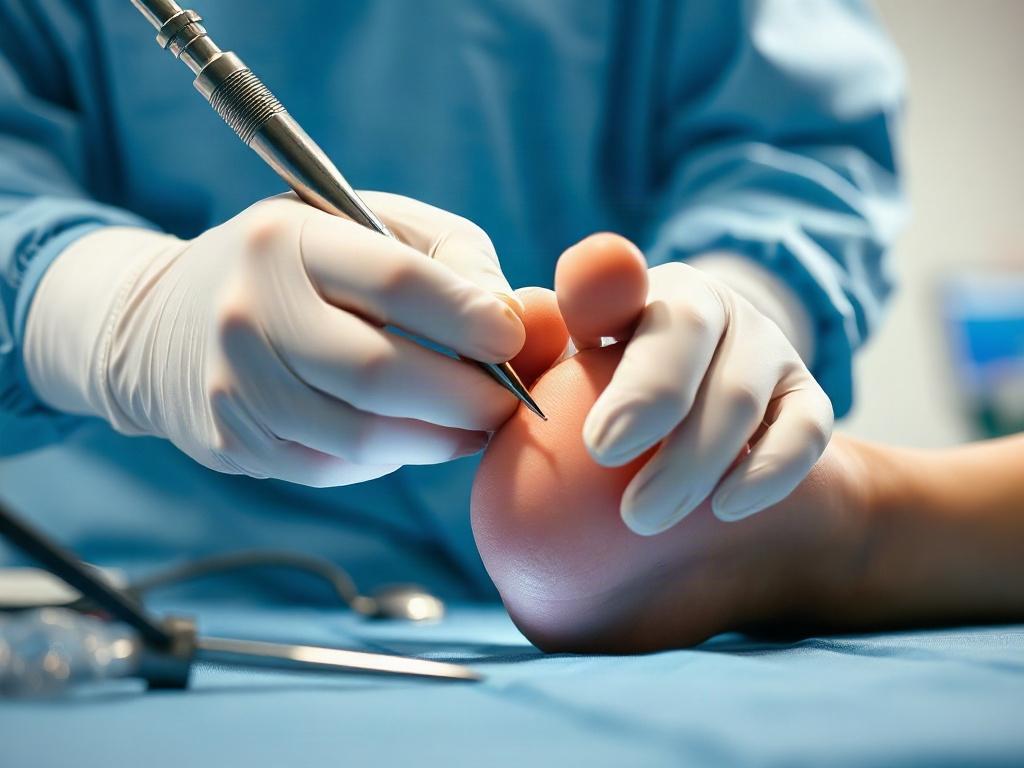
For a long time, foot surgery meant a long incision, a noticeable scar, and weeks stuck on the couch. That's a big reason so many people put off fixing a painful bunion until they can barely fit into their shoes. Minimally invasive surgery, or MIS, has changed that conversation for many patients.
If you live in the Tri-State area and you've been hearing about MIS, you probably have questions. Here's a straightforward look at what it is, what it treats, and what recovery really looks like.
What Is Minimally Invasive Foot Surgery?
MIS foot surgery uses a few tiny incisions, often just a few millimeters long, in place of one large opening. The surgeon works through those small openings with specialized burrs and instruments, guided by live X-ray imaging that shows the bone in real time. Because the skin and surrounding soft tissue stay mostly intact, there's less trauma to the area that has to heal.
How It Compares to Traditional Open Surgery
Both approaches share the same goal: correct the problem and get you back on your feet. In many cases, the bone work itself is very similar. What changes is how the surgeon gets there, and that can make a real difference in swelling, scarring, and those first few weeks of recovery.
Conditions MIS Can Treat
Bunions get most of the attention, and for good reason. MIS can also help with a range of other foot problems, including:
- Bunions (hallux valgus) and tailor's bunions
- Hammertoes and other lesser toe deformities
- Hallux rigidus, or arthritis in the big toe joint
- Haglund's deformity, the painful bump on the back of the heel
- Bone spurs and some cases of metatarsalgia
That said, not every case is a fit. Your surgeon will review your X-rays, the severity of the deformity, and your overall health before recommending an approach.
Benefits and Who Makes a Good Candidate
MIS has plenty going for it, but it's one tool among several. Knowing both sides helps you have a better conversation with your surgeon.
Why Patients Like MIS
The most obvious perk is the scar, or the lack of one. Most patients end up with a few small marks that fade over time. Many also notice less swelling and pain early on, and some can bear weight in a surgical shoe soon after surgery, depending on the procedure.
When Open Surgery Might Be Better
A few situations still tend to favor a traditional approach.
Severe or Complex DeformitiesVery large corrections, or cases that require fusing a joint, sometimes call for open surgery so the surgeon can see and stabilize everything directly.
Bone Quality and Health FactorsPoor bone density, an active infection, or poorly controlled diabetes can also change the plan. A good surgeon will be upfront about which option gives you the best long-term result.
What Recovery Looks Like
Every patient heals at their own pace, so think of this as a rough guide. For the first couple of weeks, you'll focus on keeping your foot elevated and the dressing clean and dry. Many patients walk in a special postoperative shoe during this stage, though how much weight you can put on it depends on your procedure.
Over the following weeks, swelling slowly goes down, and most people ease back into roomy, comfortable shoes. Full recovery can still take a few months. Bone needs time to heal, no matter how small the incision was.
Schedule a Minimally Invasive Foot Surgery Consultation
If foot pain is holding you back, our team would love to help you explore your options. We'll review your imaging, talk honestly about whether MIS is a good fit, and build a treatment plan around your goals. Call us at 800.321.9999 today.